
Polybutylene pipe: what you have, and what to do next
The short version
- Made from 1978 until mid 1995 and plumbed into as many as 10 million US homes, per InterNACHI.
- PB2110 printed along the tubing wall is the nearest thing to field proof, since grey plastic also ships as PEX.
- Connectors normally quit before the tubing does, and they quit by rupturing rather than dripping (InterNACHI, HUD).
- A whole home replacement lands between $1,500 and $15,000 installed in 2026 (Angi, HomeGuide), with labor taking the largest share.
- The Cox v. Shell class settlement closed to claims by 2009, so no fund remains to file against.
Polybutylene pipe is the bendable grey plastic that plumbers ran through millions of American houses between the late 1970s and the mid 1990s, and its appearance on an inspection report turns a purchase expensive. InterNACHI, the home inspector association, dates manufacture from 1978 to mid 1995 and counts as many as 10 million US homes plumbed in the material.
What is polybutylene pipe?
Polybutylene, abbreviated PB wherever inspectors write it down, is a resin extruded into supply pipe carrying hot and cold water through houses, apartments and manufactured homes. Production finished in mid 1996, per InterNACHI. Diameters inside a house sit in the 1/2 inch to 1 inch band, and while grey dominates, the material also shipped in white, silver, black and blue.
The governing standard is gone too. ASTM D3309 once covered PB hot and cold water systems and their fittings at 100 psi up to 180 F, and ASTM pulled it in 2010 with nothing current in its place. Line the dates up and one sentence fits every surviving system: at minimum 31 years in service, no live standard behind it.
The paper trail. Under the retired ASTM D3309 scheme, PB2110 is the material designation code for polybutylene, printed along the tubing wall. Reading it off your own plumbing takes you as far as proof goes short of opening a wall.
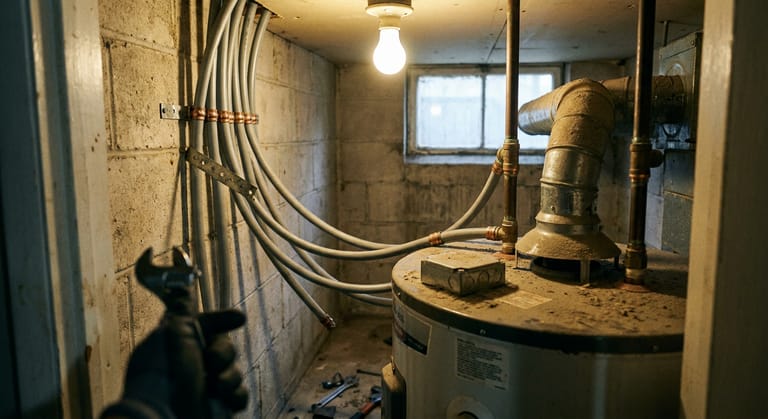
How to identify polybutylene pipe without guessing
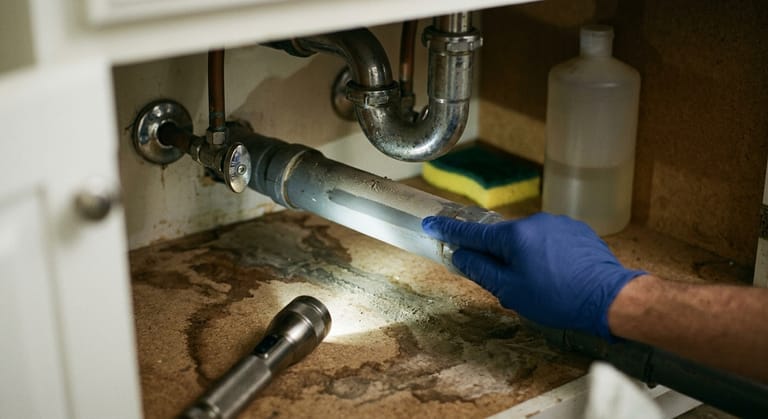
Color decides nothing by itself: today's PEX also ships in grey. Run these four checks in order.
- Find the exposed pipe. Four spots normally leave it visible: at the meter and main shutoff, at the water heater connections, at the stub outs under a kitchen sink or vanity, and on the riser behind a toilet. EPA's service line inventory guidance names the same spots.
- Read the printing. Markings run lengthwise along the pipe wall, and PB2110 is the code that ends the argument.
- Log the color and diameter. InterNACHI names grey, spelled gray on plenty of US inspection reports, as the usual shade, with white, silver, black and blue produced as well.
- Date the building. A 1978 to 1995 build or replumb lands inside the window. Anything finished past 1996 came after manufacturing stopped.
Two colors cause repeat confusion. Blue PB tubing turns up at meters and in crawl spaces, and that page answers whether blue always means polybutylene. White PB supply lines get mistaken for CPVC and for modern PEX more than any other color, so that guide compares them marking by marking. A third mix up ignores color: PE-RT is current tubing sold in the same shades, and PE-RT set against PB sorts the two by standard and stamp.
Polybutylene pipe problems: what actually fails
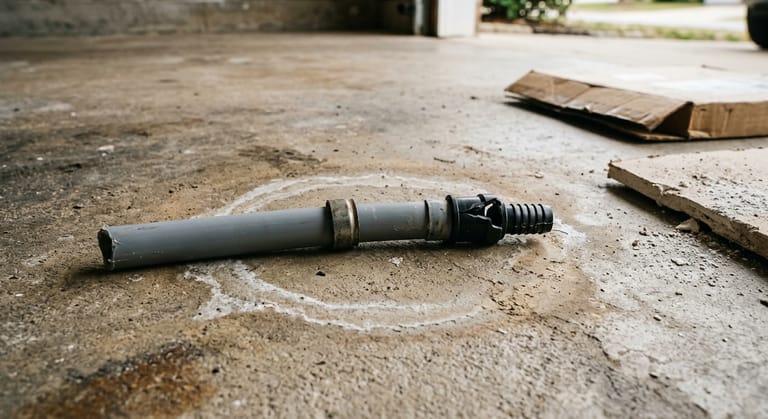
Two failure stories run side by side on separate clocks. The first is chemical. Oxidants in municipal supply, chlorine above all, attack the plastic from the bore outward: InterNACHI's account has the wall scaling, shedding flakes and going brittle until tiny cracks hollow out a pipe that still looks sound. None of it reaches the outer surface, so a grey run that looks untouched proves little.
The second story belongs to the joints, and joints are what put a ceiling on the floor. InterNACHI reports leak and line failure rates on these systems above the norm, clustered at the connectors, plastic and metal alike. HUD landed in the same place from the housing side: its Rehab Guide names certain connectors and pipe in polybutylene water systems among components known to fail.
So the issues with polybutylene pipe that reach a claims adjuster are seldom a slow weep under a sink. They are a connector letting go at full line pressure while the house is empty. That was the climate production ended in, with allegations piling up that these lines burst and wrecked property (InterNACHI).
Does that record condemn a house that has never leaked? Whether polybutylene is bad enough to rip out weighs documented failures against repipe sales copy.
If a pipe is spraying right now. The main shutoff comes first. After that, keep clear of any sagging ceiling and touch no switch or outlet in a room holding water, then call a plumber. Damage multiplies with every hour the water runs, and closing that valve is the one free move you have.
Repair or replace: the verdict this pipe earns
A spot repair is defensible when
- One fitting let go and nothing else has ever leaked
- You need water back on tonight and cannot stage a repipe this week
- The run is accessible, so the patch is not paid for twice
Replacement is the better buy when
- Leaks have repeated anywhere in the house
- Walls or ceilings are already open for other work
- Insurance eligibility or a sale rides on the answer
A repair buys time, not a solution: whatever failed at one connector exists at every other one in the building. Emergency and spot repair options covers triage, including what a plumber can honestly promise when the failure sits inside a wall.
Whole house replacement walks the job from the homeowner's side: sequencing, days without water, which walls get opened, and what a competent scope spells out. Since connectors take the blame, the fittings guide sorts plastic from metal, covers the crimp bands that hold them, and explains why a connector goes before the pipe does.
Ready to talk to a licensed repipe pro?
Call (800) 555-0195No charge to call. A licensed repipe pro answers.Licensed repipe partners in your area- Every partner plumber is licensed and insured
- Calls routed around the clock
- Nothing billed for the call
- The plumber quotes you, and you say yes or no
What a repipe costs in 2026
| Scope | Installed price | Source |
|---|---|---|
| One bathroom home, replaced with PVC | $1,500-$2,500 | Angi, 2026 |
| Two or more bathrooms, replaced with PVC | $3,000-$7,000 | Angi, 2026 |
| Whole home, 2,000 sq ft or larger | up to $15,000 | Angi, 2026 |
| Whole home, any replacement material | $1,500-$15,000 | HomeGuide, 2026 |
| Plumber labor | $45-$200 per hour | Angi, 2026 |
Angi's 2026 figures cap material at roughly $8.00 per linear foot, which is why labor swallows the invoice. You are buying access, not plastic.
Budget the repair of the repair. The $150 to $5,100 headline Angi attaches to these projects folds in single fixture work, so read it as a spread, not a whole house price. Restoration is its own line: HomeGuide prices drywall repair after a repipe from $300 to $1,500 and up, and puts a water line replacement permit between $30 and $500.
The replacement cost breakdown splits those ranges by home size, bathroom count and material, then adds the line items quotes leave out. PEX versus PB, compared honestly covers why the replacement plastic is not a repeat of the original, and converting PB pipes to PEX handles the mechanics, transition fittings included.
Lawsuit money, insurance and selling the house
Start with the correction most sites bury. Cox v. Shell Oil Company reached the Chancery Court for the Twenty-Seventh Judicial District of Tennessee on June 13, 1995, and Shell together with Hoechst Celanese agreed to put at least $950 million toward relief. By Shell's own SEC filing for the quarter ended June 30, 1998, claims were accepted until 2009. That window is shut, and no class settlement has taken new claims since. The full lawsuit history explains what the settlement covered and why circulating cutoff dates conflict.
Insurance is documented in one narrow place. The published underwriting answer from Citizens Property Insurance Corporation in Florida splits on building age:
- Where the dwelling is 20 years old or younger, polybutylene piping does not by itself end eligibility, provided nothing shows leaks, unrepaired water damage, disrepair or hazards.
- Where a new business risk is older than 20 years, this piping is uninsurable on the HO-3, HO-8, DP-1, DP-3, MHO-3 and MDP-1 forms.
One insurer, one state, not a national practice. What carriers actually do separates documented underwriting rules from repiping sales copy, and explains what to disclose.
Buyers face a narrower question: price the repipe, negotiate, or walk. Buying a house with these pipes works through inspection wording, credits and the timing that saves a closing.
Where PB sits next to lead and galvanized
Polybutylene is a property damage story rather than a contamination story, and no EPA drinking water rule attaches a replacement deadline to it. Lead and galvanized supply lines are the ones on a federal clock: under the Lead and Copper Rule Improvements EPA issued in 2024, water systems get 10 years to find and replace their lead pipes, and EPA's 2023 infrastructure needs survey puts roughly 9.2 million lead service lines still buried nationally.
A caveat rides along with that work: EPA advises against partial lead service line replacement, and the 2024 rule forbids leaving half a lead line buried except as an emergency repair or planned infrastructure work.
If what you found is dull silver grey metal rather than plastic, you are in different territory.
- Lead service lines and interior lead plumbing covers the EPA identification tests and the replacement rules.
- Galvanized steel pipes covers the rust, the flow loss and the lead that pre war steel holds onto.
- Unsure which of the five legacy materials is in your walls? Start with the identification walkthrough and work down by house age.
Not sure what you are looking at, or is it leaking right now?
Skip the research and call when any of these apply:
- Water is spraying, pooling, or running where it should not be.
- A ceiling or a wall is stained, soft or sagging.
- A fitting weeps even slightly, or wept last week and stopped.
- Pressure dropped across the whole house rather than at one fixture.
- An inspection report named PB and the closing date is two weeks out.
Searching for polybutylene pipe replacement near me means finding someone who has pulled this plastic out of a house before: sequencing and drywall access separate a clean job from an expensive one. Call (800) 555-0195, say what you found, and read the stamp if you saw one. Grayfield is an independent publisher with no crews and no plumbing license. The free call opens the partner network, a licensed and insured local plumber prices the work, and any referral fee Grayfield earns stays off your bill.
Ready to talk to a licensed repipe pro?
Call (800) 555-0195No charge to call. A licensed repipe pro answers.Licensed repipe partners in your area- Every partner plumber is licensed and insured
- Calls routed around the clock
- Nothing billed for the call
- The plumber quotes you, and you say yes or no