
Blue polybutylene pipe: the printed code decides, not the color
A blue plastic supply line above the water heater sends most owners to a search box, where color answers nothing. Blue polybutylene pipe is real enough: InterNACHI, the certified home inspectors' association, records gray as the usual shade, with white, silver, black and blue produced too.
Blue is the routine cold water shade on Kitec as well, a different system entirely, so pigment cannot name what is inside your walls. The print on the tubing can, and reading it takes a phone flashlight and ten minutes.
Was polybutylene really made in blue?
Yes, and that is where color stops helping. InterNACHI puts gray at the head of the list, blue among the alternatives. Gray proves nothing either, since PEX sold today also comes in gray. Shade narrows the field and never closes it, which is why how to identify polybutylene pipes comes down to the stamp.
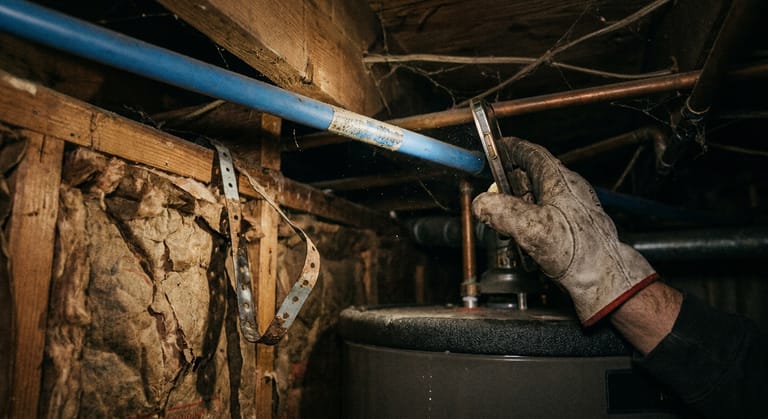
The code that settles it: PB2110
Polybutylene plumbing, hot side and cold, once ran under one ASTM standard: D3309. The material designation it assigned, PB2110, is printed into the stamp along the tubing wall. Read that code and the question is answered, pigment aside. ASTM withdrew the specification in 2010, so nothing in force today covers the tubing in your wall or a like for like repair part.
Blue is normal on Kitec, unusual on PB
The scheme comes from the court approved Kitec settlement site: cold lines typically blue, hot lines orange, with red, gray and black sold too. That tubing is PEX-AL-PEX, an aluminum core jacketed in plastic. IPEX built it and sold it under many labels: Kitec, Kitec XPA, XPA, AmbioComfort, WarmRite, PlumbBetter, IPEX AQUA, Plomberie Amelioree and KERR Controls.
On site the giveaway is at the joints, yellow toned brass closed by a crimp ring or a compression ring. InterNACHI places the system in houses and condominiums built, or stripped and rebuilt, across 1995 to 2007. Polybutylene left the line in mid 1995, so the two eras barely touch.
| Clue | Polybutylene | Kitec |
|---|---|---|
| Printed code | PB2110 | Any IPEX brand name |
| Colors made | Gray most often, also white, silver, black, blue | Blue cold, orange hot, also red, gray, black |
| Joints | Insert fittings, plastic and metal | Yellow brass crimp ring or compression ring |
| Era of the house | 1978 to mid 1995 | 1995 to 2007 |
With nothing legible left to read, the material keeps no name, and the call on what it is belongs to a home inspector or a licensed plumber. Our Kitec plumbing guide handles that system separately.
Ready to talk to a licensed repipe pro?
Call (800) 555-0195No charge to call. A licensed repipe pro answers.Licensed repipe partners in your area- Every partner plumber is licensed and insured
- Calls routed around the clock
- Nothing billed for the call
- The plumber quotes you, and you say yes or no
Where to look, and what to leave alone
- Start where supply piping already sits in the open. EPA guidance on service lines points to the entry beside the meter and main shutoff; indoors the same pipe shows at the water heater and at stub outs under sinks.
- Wipe a length clean and read the print on the pipe wall. PB2110 says polybutylene, an IPEX label says Kitec, and InterNACHI sizes household runs from half an inch to an inch.
- Photograph each joint you can reach. Connector style is the second tell, and our [polybutylene fittings guide](/polybutylene-pipe-fittings/) decodes them.
- Then stop. A pressurized line is not for a homeowner to cut, unthread or test fit; that is where licensed work begins.
Why blue polybutylene pipe fails
Color plays no part. InterNACHI puts the cause in the water: municipal supply carries chlorine and related oxidants, believed to go to work on the plastic itself. The wall scales up, sheds flakes and loses its give, and the cracks that open drain the strength out of the run.
Joints go before pipe does. InterNACHI reports leak and failure rates above what plumbing normally produces, the damage concentrated at fittings, metal ones no less than plastic. HUD's Rehab Guide agrees, treating breakdown in polybutylene water systems and some connectors used with them as a documented problem.
Age is the other constant. InterNACHI's window runs 1978 to mid 1995, manufacture ending in mid 1996, so any run still under pressure in 2026 has at least 31 years behind it. Our polybutylene guide sets out the risk picture, and what a spot repair buys you weighs the patch route.
What replacement costs in 2026
Fixture count, access and the material going back in move that number; the shade of the old tubing never does. Angi puts plumber labor at $45-$200 an hour while materials top out near $8.00 per linear foot, so the invoice is built out of hours. The full replacement cost breakdown carries the rest, drywall repair included, and how a whole home repipe runs walks the job from the owner's side.
Red flags that mean calling a plumber today
- An active drip, a damp patch or bubbling drywall near any joint, whatever the color.
- Discoloration creeping across a ceiling below a bathroom on the next floor up.
- Two leaks in one house within a year, since one is a repair and a second is the system.
- A sale in progress and a lender or agent waiting for the pipe named on paper.
- No legible print on any run you can reach, which leaves your insurer an unnamed material.
Worth saying plainly at the close. Pipe is what Grayfield publishes about, never what it does: no license, no vans, and nobody here opens a wall. Dialing (800) 555-0195 costs nothing and reaches a local plumber who carries a license and insurance, routed by the partner network, near enough to read the stamp in person. Should real work follow, a referral fee flows from the network to Grayfield, never from you, and the figure the plumber quotes reads the same either way. Still unsure the tubing is PB? Start from the age of the house with the pipe identification walkthrough.