
Cost of Replacing Galvanized Pipes: The 2026 Numbers
The short version
- HomeGuide's 2026 plumbing data prices a galvanized repipe at $2,000-$15,000 installed. Angi's whole home repipe range is $1,500-$15,000 with a national average near $7,500.
- Bathroom count moves the number more than anything else: Angi puts one bathroom at $4,000-$7,000, two at $6,500-$11,000 and three or more at $10,000-$20,000.
- Material choice is the second lever. Angi rates PEX at $0.40-$2.00 per linear foot against copper at $2.00-$8.00, and HomeGuide prices a whole house in copper at $8,000-$16,000.
- Labor is roughly 70 percent of the bill according to Angi, which is why access, not pipe, decides who wins the bid.
- Budget the repairs after the repipe: HomeGuide puts drywall patching at $300-$1,500 and up, the permit at $30-$500, and hauling out the old system at $1,000-$5,000.
Three bids on the same repipe can arrive so far apart that homeowners assume someone is lying. Usually nobody is. HomeGuide's 2026 plumbing data puts the cost of replacing galvanized pipes at $2,000-$15,000 installed, and the spread is real: bathroom count, replacement material, and how many walls come open to reach the runs.
About the byline: Grayfield is an independent publisher, not a contractor, so the bands below are sourced aggregator data, not quotes. The number here opens into a partner network and reaches a licensed local plumber; a call that becomes work can pay Grayfield a referral fee your invoice never carries.
Galvanized pipe replacement cost at a glance
| Line item | Published 2026 range | Source |
|---|---|---|
| Galvanized supply repipe, whole home | $2,000-$15,000 installed | HomeGuide 2026 |
| Whole home repipe, any material | $1,500-$15,000, average $7,500 | Angi 2026 |
| One bathroom home | $4,000-$7,000 | Angi 2026 |
| Two bathroom home | $6,500-$11,000 | Angi 2026 |
| Three or more bathrooms | $10,000-$20,000 | Angi 2026 |
| PEX in a 2,000 square foot home | $2,000-$4,000 | HomeGuide 2026 |
| Copper, whole house | $8,000-$16,000 | HomeGuide 2026 |
| Tearing out the old system | $1,000-$5,000 | HomeGuide 2026 |
| Plumbing permit | $30-$500 | HomeGuide 2026 |
| Drywall patching afterwards | $300-$1,500 and up | HomeGuide 2026 |
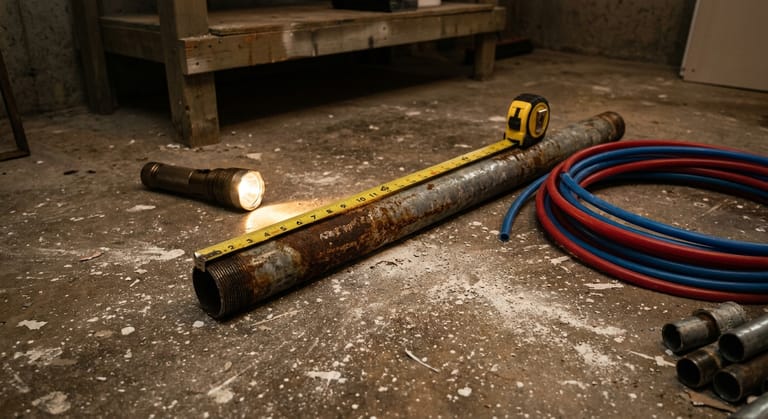
A band becomes a number only when somebody is under the house with a flashlight, counting fixtures and tracing the steel. Dial (800) 555-0195 and the partner network puts a licensed local plumber on that walk, free.
What the work runs, bathroom by bathroom
Plumbers bid fixtures, not square footage. Angi's 2026 size bands sit at $4,000-$7,000 for one bathroom, $6,500-$11,000 at two, and $10,000-$20,000 once there are three or more, and Angi notes that a three bathroom house is usually two stories, which lifts that band's top.
Angi also lists a per fixture average near $1,200, a rough marker for partial work, the kitchen branch or one bathroom stack, not a firm unit rate. The more fixtures in one visit, the lower it drifts, since the crew is set up and the walls are open.
Why the cost to replace galvanized pipes swings five to one
Angi attributes roughly 70 percent of a repipe bill to labor. That one figure is behind most of the spread, because anything that makes pipe harder to reach multiplies the biggest line on the invoice.
- Access. An open basement ceiling is cheap. Runs buried in plaster, chased through a finished second story or rising through a slab are not.
- Material rate. Angi prices tubing at $0.40-$8.00 per linear foot and adds $1.00-$4.00 of labor per foot on top, a twenty to one span on material alone.
- Fixture count. A sink, a tub, a toilet, a hose bib: each one adds joints to make, a place the pressure test can fail, and an opening to close.
- What turns up mid job. Corroded shutoffs, seized valves and an undersized main line all surface once the walls are open.
- Where you live. Angi's main water line data reaches $250 per linear foot in high cost of living areas against a $50-$150 national band, and labor markets move interior work the same way.
That is why the bands above are something to argue against, not accept. One written scope in front of three local plumbers outranks any web figure, this page included.
Replacing galvanized pipe with PEX, copper or PVC
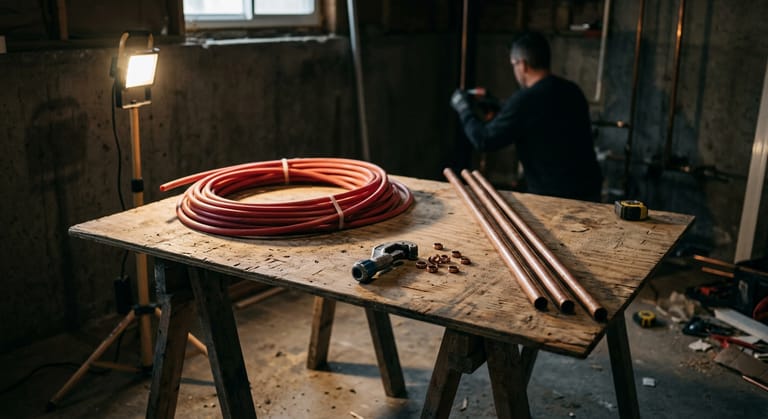
Old steel is rarely replaced like for like. The realistic choice is flexible PEX or rigid copper, and published rates put daylight between them.
PEX, the budget route
- Angi rates the material at $0.40-$2.00 per linear foot
- HomeGuide prices a 2,000 square foot home in PEX at $2,000-$4,000
- Flexes through existing cavities, so fewer walls come open and labor drops
Copper, the premium route
- Angi rates the material at $2.00-$8.00 per linear foot
- HomeGuide puts a whole house in copper at $8,000-$16,000
- Rigid joints mean more demolition to route it, which lands back in labor
PVC is the third question. No source in our set publishes a PVC specific repipe range, so no number for it appears here. PVC and CPVC are also different products, and which one your plumbing code allows on a pressurized supply line is a question for your building department before anyone prices it.
Ready to talk to a licensed repipe pro?
Call (800) 555-0195No charge to call. A licensed repipe pro answers.Licensed repipe partners in your area- Every partner plumber is licensed and insured
- Calls routed around the clock
- Nothing billed for the call
- The plumber quotes you, and you say yes or no
The costs that are not in the pipe quote
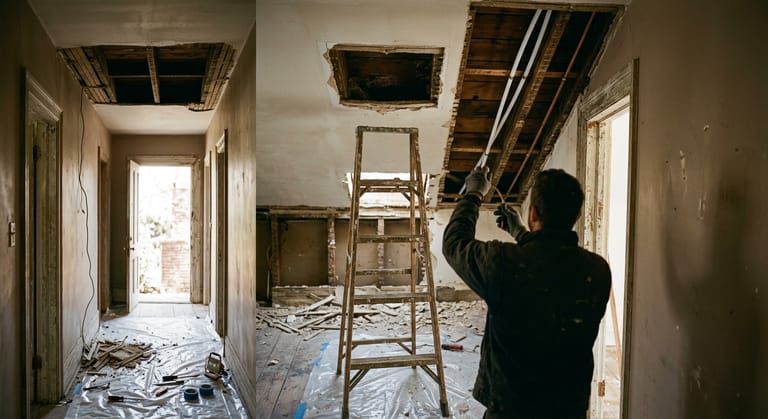
A repipe is demolition, then plumbing, then repair, and the repair rarely reaches the first conversation. The full cost of replacing galvanized pipes is the tubing scope plus these five lines.
- Removing the old system. HomeGuide puts tearing out existing plumbing in an older home at $1,000-$5,000, usually bundled into the repipe price rather than billed separately.
- The permit. A water line replacement plumbing permit is $30-$500 on HomeGuide's figures, small money that buys the inspection protecting you.
- Drywall. Closing the access holes is $300-$1,500 and up per HomeGuide, whose general drywall repair average is $612 and tape and finish rate $1.50-$3.50 a square foot.
- The buried line. If the line outside is going too, Angi's main water line data averages $1,704, or $50-$150 per linear foot, and HomeGuide adds $300-$500 for the tap connection and $300-$800 for a meter.
- The yard. A trench means restoration. HomeGuide prices resodding at $1.50-$4.00 per square foot and regrading at $0.40-$2.00.
Get all five named in writing, priced or explicitly excluded. A bid that stays silent on drywall is not cheaper, it is shorter.
Galvanized requiring replacement: when the rules take over
Indoor piping is your decision. The buried service line may not be, and that changes the money.
Why a lead rule reaches zinc coated steel
Corrosion is the reason. Lead particles fasten onto the surface of zinc coated steel, EPA says, and can travel into drinking water later; the Philadelphia Water Department describes lead collecting on corroded walls across decades. EPA sets a maximum contaminant level goal of zero for lead, a health target rather than an enforceable ceiling.
Repipe once, or patch it again?
A 20 to 50 year service life is what HomeGuide assigns galvanized steel supply pipe, an aggregator estimate, not a federal standard. Set it beside the HUD Rehab Guide, which dates the material's popularity to the years before World War II, with copper taking the market after it and plastics taking over from the 1970s. Galvanized pipes still carrying water are therefore at the ceiling of that band or past it.
That is the argument for one repipe over a standing repair account. HUD names the mechanism, because adverse water chemistry and heat both drive the corrosion faster, which is why the hot side closes up first. Re-threading one joint buys quiet on one leak. It cannot reopen a bore that scale has been narrowing for sixty years, so the upstairs shower is worse again after every visit.
Make it arithmetic, not sentiment. Add up three years of emergency calls, hold it against the bottom of Angi's one bathroom band, and work out whether the money buys pipe or rents time. The copper versus galvanized comparison sets out what the upgrade buys.
Where you save money, and where that stops
Homeowner effort pays best before anyone picks up a wrench.
- Confirm the material yourself. A coin and a magnet are all the EPA check needs: scratch the pipe where it enters the house, and zinc coated steel shows a dull gray silver face that fights the coin while a magnet clings to it. Lead, per the City of Troy, New York, flashes bright silver at the scratch instead.
- Count and photograph every fixture, then write one scope document and hand the same one to each bidder.
- Ask your building department for its published permit fee before reading anyone's allowance for it.
- Clear the work zone. Emptying closets and shifting furniture is billable time if the crew does it.
Everything past that belongs to a licensed plumber: opening structure, joining new tubing to old, pressure testing, the permit and the inspection. Call one today if you see rusty water on the morning's first draw, pressure quietly halved upstairs, damp drywall at a threaded joint, or a pinhole weep at a fitting. Each means the system is already failing.
Read this before the bids come in
Start with the galvanized pipes hub for how the material fails and how to spot it, then the replacement service walkthrough for the job from your side of the wall. If the water is discolored, rusty galvanized pipes explains the color, and do galvanized pipes contain lead handles testing. EPA runs a short homeowner check on what the line into your house is made of.
Want the cost of replacing galvanized pipes priced for your own basement, not the national spread? (800) 555-0195 reaches the partner network and puts a licensed, insured plumber near you on the line. Grayfield writes about this work but never performs it; the free call ends with an itemized figure from that plumber.