
Is polybutylene pipe bad? A straight verdict on the gray plastic
The short version
- What the record documents is a wet house, not a bad glass of water: InterNACHI and HUD log bursts and failed connectors, never contamination.
- Manufacture ran from 1978 to mid 1995 by InterNACHI's dating, which leaves every surviving run 31 years old or older in 2026.
- D3309 stopped being a live specification in 2010 when ASTM withdrew it, so nothing current covers this tubing or its fittings.
- For 2026 pricing, Angi lists $1,500-$2,500 to move a one bathroom house to PVC, and HomeGuide's whole home span runs $1,500-$15,000.
- Shell told the SEC in 1998 that claims ran only until 2009, so a repipe in 2026 comes out of your own pocket.
Three plumbers, three answers, two attached to a quote. Is polybutylene pipe bad? On the documented record, yes, with one correction the sales pitches skip: the damage is to property, not to water quality.
InterNACHI dates production from 1978 to mid 1995 and puts the number of US households that ended up with it at up to 10 million. The specification that once governed these systems, ASTM D3309, was retired in 2010. Anything still holding pressure in 2026 has therefore worked 31 years or more with no live standard behind it.
If water is already loose in the house, close the main, then call (800) 555-0195.
So is polybutylene pipe bad, or just old?
Old and defective are not the same word. Copper drawn in that same decade is still doing its job. The difference here is that three separate bodies wrote the trouble down.
- InterNACHI, the association behind certified home inspectors, records a leak and failure count for these systems that sits above the plumbing norm, with the joints giving out ahead of the pipe, molded plastic connectors and machined metal ones alike.
- HUD stated it in Rehab Guide Volume 8 with nothing softened: in these water systems, both the connectors and the tubing carry a known record of failing.
- ASTM withdrew D3309 in 2010, leaving the tubing and its fittings with no governing document still in force.
How the product died sits on that same inspector record: enough owners came forward saying their tubing had let go and ruined the rooms around it that the line was simply discontinued. Set a documented failure pattern next to a withdrawn standard, and polybutylene plumbing problems read as a replacement decision instead of a maintenance chore.
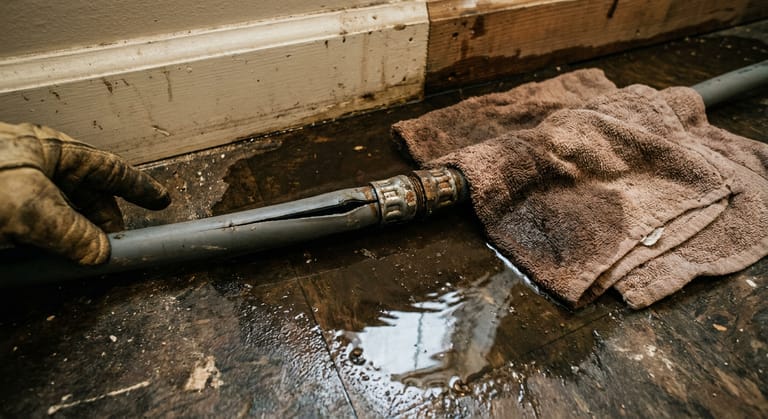
Why are polybutylene pipes bad at the fittings first?
The mechanism InterNACHI sets out is chemical rather than mechanical:
- Municipal water arrives carrying chlorine and other oxidants, and those are believed to attack the polymer itself.
- The wall gives way by stages, picking up scale, shedding flakes, then turning brittle.
- Hairline fracturing follows, and what is left is a system weaker than the one installed.
Which answers what is the main issue with polybutylene pipes: the damage is never local. Every foot of that run has carried the same treated water for three or four decades, so the joint that finally let go was the weakest point on a tired system, not the only weak one. See which fittings mate with this pipe and when a patch is worth doing.
Polybutylene pipe health risks: what the record shows
Loud forums, thin citations. The polybutylene pipe health risks people type into a search box are mostly carried over from the lead story, and lead is another material failing in another way.
On lead the federal agencies are explicit. EPA has never identified an amount of lead that is safe for children, and CDC applies the same finding to blood lead levels. For lead in drinking water, the maximum contaminant level goal EPA publishes is zero. Every one of those statements is about a metal that corrodes into water. The record InterNACHI and HUD built for this plastic is about ruptures and soaked houses.
So is polybutylene safe? This page will not answer past its sources. None of the authorities cited above traces a contamination route for the material. To learn what comes out of your own tap, EPA directs homeowners to a certified laboratory, and the list of them is kept by your state or local drinking water authority. What your utility already tests for, it can tell you. Health questions belong with a clinician rather than a plumbing page.
How bad is your own system?
No authority publishes a remaining life figure for installed polybutylene, so a contractor who names one is guessing out loud. The broad question, is polybutylene pipe bad, matters less than the narrow one: how far gone is the run inside your walls?
- Count what has already failed. One fitting in twenty years reads nothing like two leaks inside a single year. When the same branch goes twice, that run has spent its life.
- Map where the pipe travels. A burst above finished ceilings, hardwood or a downstairs neighbor costs multiples of the same burst in an open crawl space.
- Photograph the joints. Poly B plumbing problems cluster at the fittings, and the record names plastic and metal connectors alike. Get pictures on your phone before anyone writes you a number.
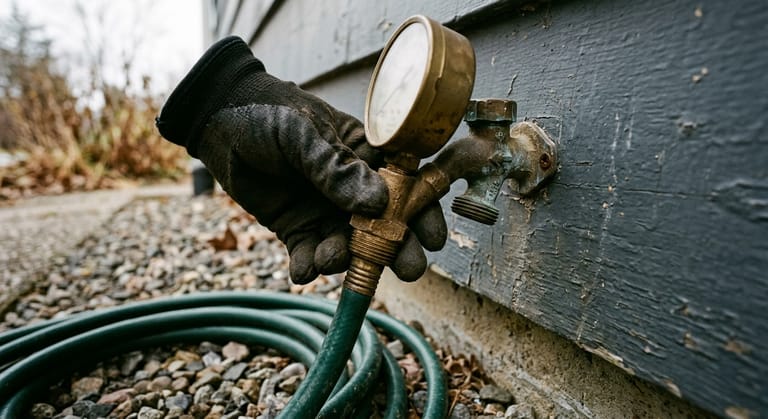
- Put a gauge on it. Static pressure that runs high leans on a brittle system every hour of every day, and a screw on hose bib gauge is pocket change.
Ready to talk to a licensed repipe pro?
Call (800) 555-0195No charge to call. A licensed repipe pro answers.Licensed repipe partners in your area- Every partner plumber is licensed and insured
- Calls routed around the clock
- Nothing billed for the call
- The plumber quotes you, and you say yes or no
What do polybutylene pipes look like?
Gray is the color most people expect, and InterNACHI backs that up, though its own list runs to white, silver, black and blue as well, at diameters between 1/2 inch and 1 inch. Color proves nothing on its own, because gray is a stock color for the PEX sold today.
Printing settles it. D3309 assigned this material the designation PB2110, and that code is stamped into the pipe wall itself. Hunt for it wherever supply lines already sit in the open: at the main entry next to the shutoff, at the water heater, at the stub outs beneath a sink. The full identification guide to polybutylene pipe goes deeper, and our checklist for old house piping covers what else may sit beside it.
The costs that are not the plumbing bill
Insurance. Florida's state created insurer, Citizens Property Insurance Corporation, has published its rule. A dwelling of 20 years or newer carrying this piping can still be eligible, so long as there are no leaks and no unrepaired water damage. Age the same house past 20 years and Citizens will not take it as new business on its main homeowner and dwelling forms. One state insurer, though, is not a nationwide practice.
Settlement money. There is none left to collect. The 950 million dollar fund existed, Shell laid it out for the SEC in 1998, and that filing set 2009 as the final year for claims. Nothing has reopened since.
What ending it costs in 2026
| Scope | 2026 range | Published by |
|---|---|---|
| One bathroom home, swapped to PVC | $1,500-$2,500 | Angi |
| Two or more bathrooms, to PVC | $3,000-$7,000 | Angi |
| Whole home by size and material | $1,500-$15,000 | HomeGuide |
| Drywall opened for access, then repaired | $300-$1,500 | HomeGuide |
Signs that end the debate and start a phone call
- One branch that has leaked twice inside twelve months
- Drywall staying damp, or a stain coming back after it dries
- The meter dial creeping along while nothing in the house is running
- A fitting that starts weeping after somebody moved the pipe beside it
- Any moisture whatsoever at a joint sitting over a finished ceiling
Grayfield publishes independently, holds no plumbing contractor's license, and sells no repipes. Dialing (800) 555-0195 opens a partner network rather than an editor's inbox: whoever answers is a licensed and insured plumber working in your area, close enough to read that stamp with his own eyes before naming a price. The call itself is charged to nobody. Should the visit turn into a job, a referral fee reaches Grayfield from the plumber's end of the deal, and the figure quoted to you does not move because of it.
Ready to talk to a licensed repipe pro?
Call (800) 555-0195No charge to call. A licensed repipe pro answers.Licensed repipe partners in your area- Every partner plumber is licensed and insured
- Calls routed around the clock
- Nothing billed for the call
- The plumber quotes you, and you say yes or no