
Polybutylene pipe insurance: what is documented and what is sales copy
The short version
- Citizens Property Insurance Corporation in Florida is the only US insurer found with a published rule: new business over 20 years of age with polybutylene piping is not insurable under its HO-3, HO-8, DP-1, DP-3, MHO-3 and MDP-1 forms.
- No state insurance regulator bulletin naming this material was located, so nobody can honestly tell you what most carriers do.
- InterNACHI puts the close of production at mid 1996, so every house plumbed with it passed 20 years old by 2016 at the latest.
- A policy answers for the water damage, not for the plastic: no verified source shows one paying to remove piping that has not failed.
- Angi 2026 puts replacement at $1,500-$2,500 for a one bathroom home in PVC and up to $15,000 for a whole home of 2,000 square feet or larger.
Ask three agents about the gray supply plastic behind your walls and you get three answers, none of them written down. Here is what survives a check against the documents.
Exactly one insurer sets out a rule: Citizens Property Insurance Corporation, Florida's state created residual market insurer, says new business risks over 20 years of age with polybutylene piping are not insurable under its HO-3, HO-8, DP-1, DP-3, MHO-3 and MDP-1 forms.
Past that, no carrier or regulator document describing a national practice was located. Polybutylene pipe insurance is a carrier by carrier question, and any page announcing what most companies do is guessing.
Does homeowners insurance cover polybutylene pipes?
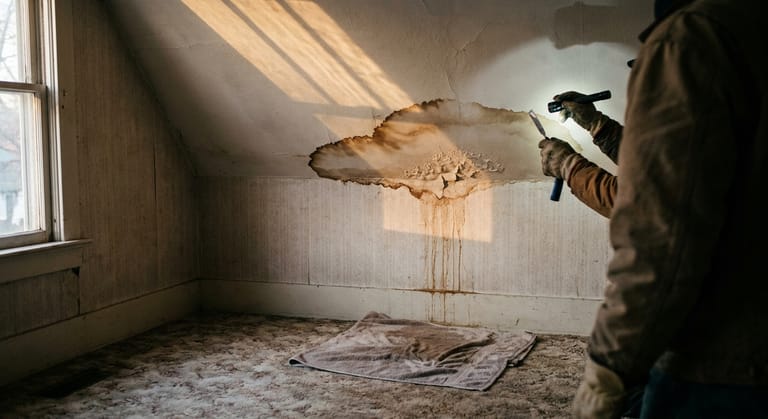
Two questions get mashed together here, so pull them apart. A policy responds to a loss, and the loss is the soaked ceiling rather than the plastic behind it. InterNACHI, the home inspector association, records that manufacturing stopped amid allegations of lines bursting and wrecking property, the event households file on.
The second question is whether anyone pays to take intact piping out. No verified source says so. Homeowners policies answer for sudden accidental loss and broadly exclude wear and tear, so a planned repipe stays a homeowner expense.
NerdWallet's plumbing guide, updated June 2026, lists service line coverage among the optional endorsements but states no terms for it, so it cannot be pointed at as funding for a pipe that has not failed.
A line failing right now outranks every coverage question here. Shut the main valve, keep clear of a bulging ceiling, and photograph the wet rooms and the split before cleanup starts.
Citizens insurance and polybutylene: the one published rule
Citizens exists by Florida statute as the state's residual market insurer, so its wording is an underwriting rule, not an agent's opinion. That makes it the only piece of polybutylene pipe insurance practice anyone can cite, and it arrives in two halves pointing opposite ways.
| Situation | Published position |
|---|---|
| Dwelling 20 years old or newer with no signs of leaks, unrepaired water damage, disrepair or hazards | May be eligible with Citizens (Florida) |
| New business risk over 20 years of age with this piping | Not insurable under HO-3, HO-8, DP-1, DP-3, MHO-3 and MDP-1 |
| Any other US carrier, any other state | No published rule located in this research pass |
InterNACHI dates manufacture from 1978 to mid 1995, so the friendlier half of that rule expired on its own years ago. One insurer in one state proves nothing about a carrier in Ohio, yet it is the clearest documented case of polybutylene pipes and Florida insurance colliding.
What about State Farm insurance and polybutylene?
Homeowners pair a carrier name with this plastic in search, State Farm among them. A pass across insurance trade press, industry bodies, state insurance departments and carrier sites turned up no underwriting rule from a national US carrier naming polybutylene, and no state regulator bulletin on it. What fills those results is contractor and agency marketing, so the percentages floating around have no filing behind them.
Square One, a Canadian home insurer, publishes the nearest thing to a carrier position on a problem plastic, writing about Kitec rather than this one: it can insure most homes with that system, particularly where there is no leak history, though a higher deductible applies to losses from it and comes off once it is replaced. Different plastic, different country, so read it as a shape, not an answer.
Ask by email, never by phone. Three questions produce a usable answer: is supply piping material an eligibility or rating factor, does a loss traced to it carry its own deductible, and does replacement change either answer. A written reply is something you can hand to the next agent or a buyer.
Ready to talk to a licensed repipe pro?
Call (800) 555-0195No charge to call. A licensed repipe pro answers.Licensed repipe partners in your area- Every partner plumber is licensed and insured
- Calls routed around the clock
- Nothing billed for the call
- The plumber quotes you, and you say yes or no
Getting insurance with polybutylene pipes: the order of operations
- Confirm the material. PB2110 stamped on the tubing is the designation code under ASTM D3309, withdrawn in 2010, and it settles what gray color cannot. The fittings guide shows where that stamp is readable.
- Answer the application accurately. A wrong answer about the plumbing is worse than the plumbing.
- Shop before renewal rather than after a non renewal letter lands.
- Price the work as a real option. The cost breakdown sets that number beside your premium.
- Keep the invoice and the permit. Paperwork turns one word on next year's application into repiped in 2026.
Does replacing the pipe fix the problem?
Where a rule turns on the presence of a material, taking the material out removes the trigger. The Canadian example above drops its elevated deductible after replacement, and the Citizens rule works the same way, because it asks what is in the walls.
Then the money question arrives. Angi's 2026 data puts this job at $1,500-$2,500 for a one bathroom home redone in PVC, $3,000-$7,000 for two or more bathrooms, and up to $15,000 for a whole home of 2,000 square feet or larger, while HomeGuide's 2026 figures give a comparable $1,500-$15,000.
No policy buys the pipe back from you, and settlement money is gone: Shell's own 1998 SEC filing describes a $950 million fund for claims filable only until 2009, and the Kitec administrator says that settlement's claims deadline has passed too. Why no payout is coming has the record.
Angi's 2026 figures put plumber labor at $45-$200 per hour and materials near $8.00 per linear foot, so the invoice is mostly hours. HomeGuide adds $300-$1,500 and up for drywall opened to reach the runs.
Red flags: stop shopping quotes and call a licensed plumber
- A non renewal notice, or a quote declined with the plumbing named as the reason.
- A second water loss inside one policy year.
- A ceiling stain widening where no fixture sits above it.
- A buyer's inspection report naming the material during a sale.
Any of those has outrun the paperwork. Dial (800) 555-0195 and the line reaches a licensed, insured local plumber in Grayfield's partner network who can open the wall and quote it. Grayfield is an independent publisher, never a plumbing contractor: the partner may pay a referral fee, you pay nothing, and what the job costs is negotiated with the plumber.
Two things settle most polybutylene pipe insurance arguments: a written answer from your carrier, and a real number for the replacement. Start at the polybutylene overview, read how a whole house replacement runs, and see what a spot repair can promise if water is running tonight.
Ready to talk to a licensed repipe pro?
Call (800) 555-0195No charge to call. A licensed repipe pro answers.Licensed repipe partners in your area- Every partner plumber is licensed and insured
- Calls routed around the clock
- Nothing billed for the call
- The plumber quotes you, and you say yes or no