
Polybutylene pipe lawsuit: the window closed, and nothing replaced it
The short version
- Shell Oil named 2009 as the claims horizon in its own 1998 filing with the SEC. That window shut, and no second one opened.
- Cox v. Shell Oil Company reached a Tennessee chancery court on June 13, 1995, where Shell and Hoechst Celanese agreed to contribute at least $950 million.
- Year tagged searches keep recycling that same 1990s case, and the two exact cutoff dates in circulation contradict each other.
- Angi's 2026 data puts a one bathroom home redone in PVC at $1,500-$2,500, and a whole home of 2,000 square feet or more at up to $15,000.
- Florida's Citizens will not write new business over 20 years of age with this piping, so identification is a money question.
Grey plastic tubing turns up in a basement, somebody searches "polybutylene pipe lawsuit", and the results promise a settlement. The honest answer goes first: no class settlement is accepting these claims.
In a July 1998 filing with the Securities and Exchange Commission, Shell Oil Company described a $950 million fund to pay them, plus an end date: claims "may be filed until 2009", a horizon the filing itself hedged. That year passed with nothing behind it. What sits in front of you is a repair decision, not a claim form.
Grayfield reports on this material and holds no plumbing license. The number here routes to licensed local plumbers who quote repipes weekly.
Cox v. Shell: the class action lawsuit over polybutylene pipe
Every dollar in this story ran through that single case. Cox v. Shell Oil Company reached Tennessee's chancery bench for the Twenty-Seventh Judicial District on June 13, 1995, and an opinion the Tennessee Court of Appeals issued afterward records that Shell and Hoechst Celanese Corporation agreed to contribute at least $950 million to provide relief.
Membership ran broad: every owner of a structure then plumbed in this material, companies as well as households, plus earlier owners out of pocket from a failure.
Three things share one sentence of that filing: an entity stood up to process claims, the $950 million behind it, and the 2009 horizon on both. That date comes from the defendant, not a repiping company's blog, which is why this page follows it. Read the 1998 filing on SEC EDGAR.
Why polybutylene pipe went into so many walls
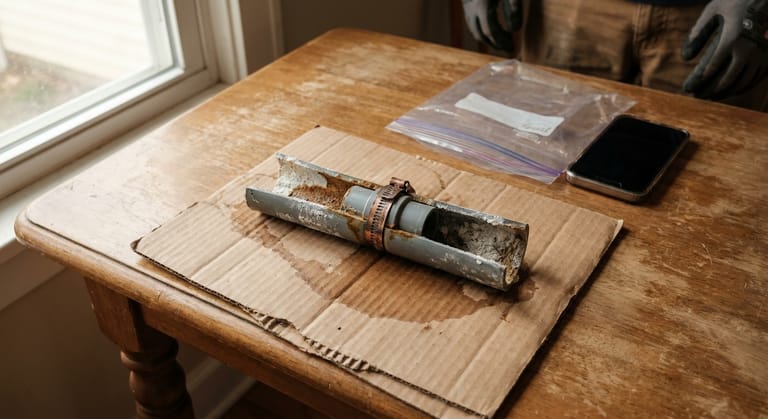
InterNACHI, the home inspector association, dates the manufacturing run 1978 to mid 1995, counts as many as 10 million US homes on the material, and ties the mid 1996 shutdown to allegations that these lines were bursting and wrecking property.
Its account of the mechanism is tentative: chlorine and other oxidants in treated supplies are thought to leave the plastic scaled and brittle until hairline cracks open, usually showing first at a fitting.
| Date | What happened | Source |
|---|---|---|
| 1978 to mid 1995 | In production for home plumbing | InterNACHI |
| June 1995 | Cox v. Shell filed in Tennessee | Tenn. Ct. App. opinion |
| July 1998 | Shell tells the SEC: $950 million fund, claims until 2009 | SEC EDGAR |
| 2010 | ASTM withdraws the D3309 specification | ASTM International |
Searching for a polybutylene pipe lawsuit 2023 or later?
Year tagged queries circulate because the original case is famous and nothing newer replaced it. Two cutoff days contradict each other across repiping and legal marketing sites, so this page names the year on the record and never a day. The door shut by 2009 and stays shut.
A second plastic muddies things. Kitec ran a $125 million fund of its own, and its administrator now lists the case as past the claims deadline. Two closed doors, two unrelated materials.
How do I file a polybutylene pipe lawsuit today?
Not into the class settlement: no claims process remains open. Whether an individual claim under state law survives turns on where you live, the dates and the facts of your house. Only a licensed attorney can weigh it. The useful work meanwhile is evidence and pricing.
- Pin down the material. PB2110 stamped along the tubing wall is the designation code from the withdrawn D3309 standard.
- Shoot the failure where it sits, before a wrench touches it, and bag the failed fitting.
- Hold on to paperwork. Invoices, dates, damage photos, any written opinion a plumber gave on the cause.
- Get your insurer's position on paper: ask how the policy treats polybutylene pipes.
- Collect two written repipe quotes, so any negotiation runs on real numbers.
Ready to talk to a licensed repipe pro?
Call (800) 555-0195No charge to call. A licensed repipe pro answers.Licensed repipe partners in your area- Every partner plumber is licensed and insured
- Calls routed around the clock
- Nothing billed for the call
- The plumber quotes you, and you say yes or no
What color is polybutylene pipe?
Grey is the usual answer, per InterNACHI, though the plants also turned out white, silver, black and blue, in household sizes of roughly 1/2 inch to 1 inch. Color proves nothing, since PEX ships in grey today.
What settles it is the stamp. PB2110 printed on the tubing wall is the material designation code, and the identification walkthrough on the hub page covers the hunt when most of the run is buried.
Three spots repay a look before anyone opens a wall: the entry near the main shutoff, the water heater connections, and the stub outs below sinks and behind toilets. Grey tubing with banded plastic connectors is a strong hint, and the fittings guide names the family.
Polybutylene pipe vs PVC: what the swap costs in 2026
Most readers end up at a repipe quote, not a payout. Here is what the national aggregators publish for 2026.
Take a single bathroom house switched to PVC: Angi's 2026 cost page lands it at $1,500-$2,500. Two bathrooms or more moves it to $3,000-$7,000, and a whole home of 2,000 square feet or larger runs as high as $15,000. HomeGuide brackets the same job at $1,500-$15,000.
The $150-$5,100 headline Angi leads with sweeps in partial jobs, which is why its floor looks improbable. On that page, plumber time runs $45-$200 an hour against materials peaking near $8.00 per linear foot, so hours drive the total. The cost breakdown separates the line items and the replacement walkthrough deals with scope. No range is a quote.
Will homeowners insurance cover polybutylene pipe?
Underwriting is set carrier by carrier and state by state, so any confident national answer deserves a squint. One rule is published in black and white, backed by an insurer a legislature created.
In Florida, Citizens Property Insurance Corporation keys its underwriting to the age of the dwelling. A home of 20 years or newer with this piping can still qualify, so long as it carries no leaks, no unrepaired water damage, no disrepair and no hazards.
Past 20 years of age, a home coming to Citizens as new business is shut out of these forms: HO-3, HO-8, DP-1, DP-3, MHO-3 and MDP-1. The insurance page sets out what to ask your carrier.
Beyond that rule, no carrier or regulator document on record describes a general US practice, so nobody can honestly say what the market does. Ask yours in writing.
Red flags: stop researching and call a licensed plumber
- A ceiling stain that keeps widening with no fixture above it.
- A joint behind drywall that weeps, dries out, then weeps again.
- Two leaks anywhere in the house inside twelve months.
- Tubing that flakes or splits the moment a connector comes off.
- A pending sale or renewal where the piping has already come up.
None of those is a legal problem; each is a plumbing call. (800) 555-0195 reaches the Grayfield partner network of licensed and insured local plumbers. Grayfield publishes independently and does no plumbing work: the call is free, and you settle scope and price with the plumber.
Where the money question actually lands
Most people arriving here want money from someone else, or permission to stop worrying. The record gives neither.
The polybutylene pipe lawsuit that mattered wrapped up a generation ago, the fund it built stopped taking claims by 2009 on Shell's own account, and ASTM withdrew the specification in 2010, so even a patch sits outside a live standard.
What is left is ordinary maintenance with an odd history: a spot repair tonight, then a written quote for the rest of the house.
Ready to talk to a licensed repipe pro?
Call (800) 555-0195No charge to call. A licensed repipe pro answers.Licensed repipe partners in your area- Every partner plumber is licensed and insured
- Calls routed around the clock
- Nothing billed for the call
- The plumber quotes you, and you say yes or no