
PE-RT pipe vs polybutylene: a live product against a retired one
The short version
- Read the stamp, not the color. InterNACHI dates the PB2110 plastic to 1978 through mid 1995, with the last of it made in mid 1996.
- D3309 lapsed in 2010, which left polybutylene without a live product standard. Nothing in that withdrawal touched PE-RT.
- PE-RT enters the legacy record once, as the PERT-AL-PERT tubing listed in the Kitec settlement, and InterNACHI blames the brass fittings there.
- Replacement runs $1,500-$15,000 in HomeGuide's 2026 figures, and Angi's 2026 data sends close to 70 percent of the bill to labor.
Behind drywall the two plastics look like cousins, and there the resemblance stops. The PE half of the name is polyethylene, the RT half is raised temperature resistance, so the material serves hot and cold supply and radiant floor loops. The retired one is what InterNACHI, the certified home inspectors' association, dates from 1978 to mid 1995, made until mid 1996, and present in no more than 10 million US homes.
Most people comparing PE-RT pipe vs polybutylene do it with a repipe quote in hand, so the short answer first: not one idea in two grades. The tubing wall proves it. PB2110 is the designation the older plastic wore under ASTM D3309, the specification ASTM pulled in 2010.
Is PE-RT the same as polybutylene?
No, and the gap is wide. Polybutylene is a polymer of its own whose production window closed in the 1990s. PE-RT is a product supply houses still sell.
Color decides nothing. Gray was the usual run, but InterNACHI's record also has the older plastic in blue, black, silver and white, at about 1/2 inch to 1 inch, and current tubing shares that spread. So the printed marking decides, and the guide to fittings that still mate with it covers the joint styles.
Clean the pipe before you photograph it. Dust swallows the print line, and PB2110 read near the water heater ends the argument.
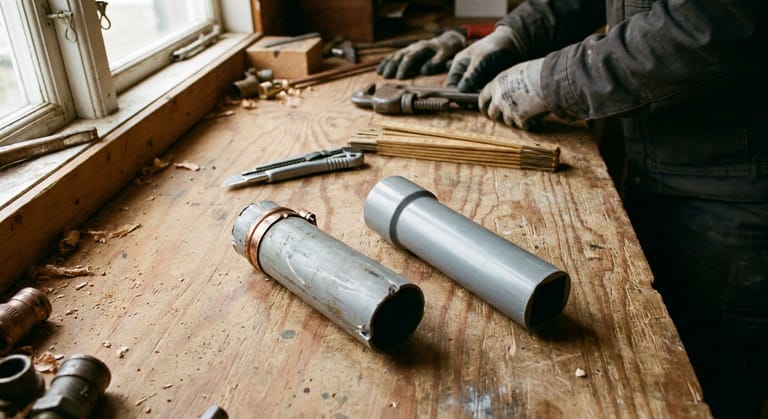
PE-RT pipe vs polybutylene, line by line
| Parameter | Polybutylene (PB) | PE-RT |
|---|---|---|
| Status in 2026 | Not made since mid 1996 (InterNACHI) | Still a current product |
| Product standard | ASTM D3309, withdrawn 2010 | No withdrawn standard on this record |
| Years in US homes | 1978 to mid 1995 (InterNACHI) | No install window in this record |
| Age of what is installed | At least 31 years old | New |
| Failure mode on record | Oxidants, chlorine above all, believed to open micro fractures (InterNACHI) | None in this legacy record |
| Where leaks start | Usually at connectors (InterNACHI, HUD) | No systemic weak point recorded |
| Class settlement | Cox v. Shell, $950 million, claims until 2009 (Shell SEC filing) | Only inside Kitec, deadline passed 2020 |
| Replacement cost | $1,500-$15,000 (HomeGuide 2026) | Not priced on its own by either aggregator |
Where PE-RT reaches the legacy record
One overlap exists, no more. The official Kitec settlement defines the Kitec System across four pipe types, PEX, PEX-AL-PEX, PE-AL-PE and PERT-AL-PERT, plus valves and fittings IPEX made or had made, so a PE-RT layer did run inside some Kitec tubing. InterNACHI places that system in houses and condos put up or heavily renovated across 1995 to 2007.
The settlement FAQ keeps the claim at arm's length: the suits alleged the Kitec System could fail early and fall short of what users reasonably expect. IPEX denies the systems are defective.
The failure InterNACHI describes starts in the brass, not the plastic. Fittings holding a heavy share of zinc corrode by dezincification, and the powder left behind narrows the passage, weakens the joint and can burst the line. Brand names are in Grayfield's Kitec identification guide.
Both claim windows are shut. Shell's SEC filing ends Cox v. Shell claims at 2009, and Kitec stopped taking them after January 9, 2020. No fund pays for this work in 2026.
Why the older plastic earned its file
What goes wrong here is chemistry, not stress. On InterNACHI's account the oxidants a utility leaves in the supply, chlorine above all, are believed to attack the polymer, scaling it, flaking it and leaving it brittle, while micro fractures take strength out of the wall. Nothing here keeps a schedule, so local water chemistry sets the pace.
Joints give out ahead of the pipe. InterNACHI records a leak rate above the plumbing norm and puts most of it at the connectors, and HUD's rehab guidance is blunter, filing certain polybutylene pipe and connectors among components with a documented record of failing. Manufacturing stopped as allegations mounted of these lines rupturing and wrecking property. Read the file as water damage, not drinking water.
Ready to talk to a licensed repipe pro?
Call (800) 555-0195No charge to call. A licensed repipe pro answers.Licensed repipe partners in your area- Every partner plumber is licensed and insured
- Calls routed around the clock
- Nothing billed for the call
- The plumber quotes you, and you say yes or no
What the changeover costs in 2026
Scope drives Angi's 2026 numbers. One bathroom switched to PVC lands at $1,500 to $2,500. Two or more bathrooms move the band to $3,000 to $7,000. Past 2,000 square feet the whole home figure reaches $15,000.
Neither aggregator prices PE-RT by itself, so a bid built on a material rate deserves questions. In Angi's split, labor takes close to 70 percent of the repipe bill, billed at $45 to $200 an hour.
Two lines fall off quotes, both priced by HomeGuide for 2026: closing the drywall opened to reach the pipe, $300 to $1,500 and up, and the water line plumbing permit, $30 to $500. The cost breakdown by scope carries the rest.
Judge the bids on hours. With labor at roughly 70 percent per Angi 2026, two straight quotes can sit thousands apart on crew time. Ask how many openings the layout forces and who patches them.
The same stamp, three different calls
A dry one bathroom house
One bathroom, PB2110 on the tubing, no repair history. Angi's $1,500 to $2,500 for that scope is a calendar item, not a crisis.
A condo with one repair behind it
A targeted spot repair buys time while full quotes come in. Press on the restoration figure: condo runs cross shared walls and ceilings.
A house about to be listed
Here the plastic is the classic hidden defect in a sale. Angi prices two bathrooms or more between $3,000 and $7,000, so a firm quote beats a credit haggled at closing. Next is the replacement walkthrough.
The verdict
The PE-RT pipe vs polybutylene comparison does not finish level. Where that plastic is already in the walls, the choice is living with it or paying to pull it out, and three sourced facts decide it: the standard lapsed in 2010, leaks begin at the fittings, and no settlement money is left.
When to call a licensed plumber
Reading a stamp costs nothing. Every step past it wants licensed eyes on the pipe.
- Moisture on a connector. Fittings are the documented weak point, and a slow weep warns before the split.
- A second leak within a few years. One repair can be bad luck. A repeat is the failure rate InterNACHI writes up.
- A stain widening on a ceiling under a wet room. Water rides the joist and drops where it can, so the patch rarely sits under the break.
Grayfield is an independent publisher and takes on no plumbing work. Dial (800) 555-0195 and a licensed and insured partner network answers, putting a licensed local plumber on the line to read the tubing; the price stays between you and that plumber. Still reading? Start again at the pipe identification walkthrough or the polybutylene material hub.