
Changing Galvanized Pipes to PVC, Section by Section
The short version
- Being a cold water material, PVC hands hot supply runs over to CPVC, PEX or copper.
- Cement will not bond plastic to steel, so every crossing runs through a threaded adapter or a listed transition coupling.
- A 20 to 50 year service life for galvanized supply piping, per HomeGuide, is the argument for doing the whole run.
- Galvanized pipe walls can hold lead deposits, per EPA, so run every tap and clean the aerator screens after a cut.
Changing galvanized pipes to PVC covers two jobs that share a name. On a buried cold service line, and on drain, waste and vent piping, rigid white plastic is a routine substitute. Inside the walls on hot supply it is not: PVC is rated for cold water, so hot runs go to CPVC, PEX or copper. The first decision is therefore which run plastic may carry, not which adapter to buy. Already watching a joint drip? Shut the main, then dial (800) 555-0195.
Where the swap works and where it does not
HUD's Rehab Guide dates the heyday of galvanized iron and steel piping to the years up to World War II; copper took over afterward, plastics from the 1970s. Match material to duty before cutting.
| Run | Plastic here? | Usual answer |
|---|---|---|
| Buried cold service line | Commonly yes | Rigid plastic listed for pressure |
| Drain, waste and vent | Yes | Schedule 40 PVC, solvent welded |
| Cold supply indoors | Sometimes | Whatever your code lists |
| Hot supply indoors | No | CPVC, PEX or copper |
| Any fuel line | No | Licensed gas fitter only |
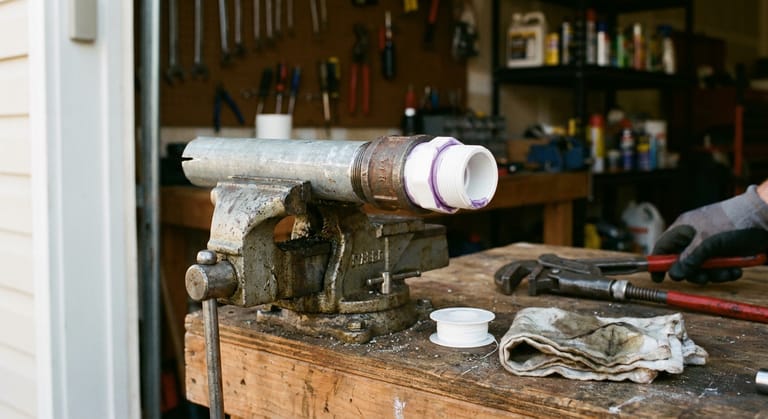
Replacing galvanized pipes with PVC: whole run or one section?
Your budget votes for one section; the steel votes for all of it. HomeGuide puts the service life of galvanized supply piping at 20 to 50 years, and HUD notes that adverse water conditions and heat speed the corrosion. Whatever stays overhead has aged in the same water. Price the full replacement first.
Before the plastic question comes a paperwork one. Your water system has already filed this address under one of EPA's four inventory names: lead, galvanized requiring replacement, non lead, or lead status unknown. Steel behind a lead run, now or ever, takes the second name. The Lead and Copper Rule Improvements pull such a line over its whole length instead of patching it, and EPA argues against partial replacement on the evidence of the 2011 Science Advisory Board report. Utility and owner shares follow the local program.
Shut off the water and settle the lead question
Before the blade touches anything: close the main, open the lowest tap and let the run drain. Not every gray steel line in an old basement carries water, so trace it end to end; one finishing at an appliance is fuel piping, a gas fitter's work. Gas on the air at any stage means everyone outside first, with 911 and your gas utility called from there; indoors, no switch, no flame, no phone.
The second hazard outlasts the shutoff.
What a cut stirs up: EPA's consumer flyer on lead in drinking water warns that the inside of galvanized pipe can hold lead deposits, which a saw blade disturbs. Once water is back on, work EPA's interim steps: run a tap before anyone drinks, keep drinking, cooking and formula water on the cold side, since lead does not boil off, and scrub the aerator screens. Only a certified laboratory can say what a tap holds, and EPA sends households there. How the pipe picks it up: [lead and galvanized steel](/galvanized-pipes-contain-lead/).
How to connect PVC to galvanized pipe
Nothing bonds plastic to steel. Solvent cement welds PVC only to more PVC, leaving threads as the only way across.
A galvanized pipe to PVC adapter is one plastic fitting: pipe thread on one end, weld socket on the other. Sold by nominal thread size, a 3/4 galvanized pipe to PVC adapter marries a 3/4 inch steel thread and no other. Pick the male pattern and turn it into a steel female fitting; reversed, the socket splits, since a tapered thread behaves like a wedge inside plastic. Where the steel stub finishes male, spin a steel coupling on and let the plastic land there. Tape the male thread; the taper seals, not the wrench.
A galvanized pipe to PVC coupling takes another route: a shielded or grip style transition that clamps over both outside diameters. Banded rubber patterns stay on drain and vent piping and never go near pressurized supply.
Ready to talk to a licensed repipe pro?
Call (800) 555-0195No charge to call. A licensed repipe pro answers.Licensed repipe partners in your area- Every partner plumber is licensed and insured
- Calls routed around the clock
- Nothing billed for the call
- The plumber quotes you, and you say yes or no
How to connect non threaded galvanized pipe to PVC
Most non threaded stubs arrive with the plain end a saw leaves. Three routes, sturdiest first:
- Cut a fresh thread. A hand die or rented power threader cuts a taper onto the stub, and a steel coupling spun on accepts the plastic adapter. The cutting and threading walkthrough covers it.
- Fit a listed transition coupling. A gasket and grip ring clamp the bare steel. Whether it may close behind finished wall depends on the listing and your inspector.
- Move the joint. Cutting back to a sound fitting and starting there is often cheapest.
Changing galvanized pipes to PVC step by step
- Confirm the duty. Cold, buried and drainage runs qualify; hot supply does not.
- Settle the permit. The building department has the say, and HomeGuide's water line replacement plumbing permit figure runs $30 to $500.
- Isolate and drain. Main shut, lowest tap open, buckets under the low points.
- Cut the section out in two passes. Steel captured between two fittings will not unscrew: back one end off and the other only draws tighter.
- Prepare the steel stub. Ream the burr, square the edge, then thread it or fit the transition coupling.
- Dry fit, then weld the plastic. Confirm alignment, prime and cement, cure fully before pressure returns.
- Repressurize slowly. Open the main part way, walk each joint, then run every tap clear.
What the conversion actually costs
Changing galvanized pipes to PVC is quoted like a repipe, not a fitting swap: access outweighs the price of the plastic.
HomeGuide prices a repipe out of this material at $2,000 to $15,000 installed. Angi's 2026 numbers break it apart: $0.40 to $8.00 per linear foot for the pipe, $1.00 to $4.00 per foot of labor, labor being near 70 percent of the invoice. Budget for the holes opened along the way too: HomeGuide files drywall repair after a repipe at $300 to $1,500.
The variables behind those ranges sit in the repipe cost guide; material choice in copper versus galvanized steel.
When to stop and call a licensed plumber
Put the tools down when a thinned wall stops the die, when metal flakes under the wrench, when scale claims more of the bore than the opening, or when a joint weeps twice. Rusty water that keeps returning says the run is shedding, not that your fitting went in wrong.
Rather hand the threading to somebody else? What Grayfield runs is an independent publication, never a plumbing business: no license, no truck, no crew. Dial the number here at any hour and a licensed, insured local plumber from the partner network picks up; if the call becomes work, the partner pays Grayfield a referral fee and your quote is unaffected. Still guessing at what the wall hides? Begin with the guide to galvanized piping or the identification walkthrough, then call (800) 555-0195.
Ready to talk to a licensed repipe pro?
Call (800) 555-0195No charge to call. A licensed repipe pro answers.Licensed repipe partners in your area- Every partner plumber is licensed and insured
- Calls routed around the clock
- Nothing billed for the call
- The plumber quotes you, and you say yes or no