
When Were Lead Pipes Banned in the United States?
The short version
- 1986 is the federal date: Safe Drinking Water Act amendments ruled out pipe, solder and flux short of lead free, with state enforcement due 24 months after June 19, 1986 (EPA).
- New work was all it covered. Nothing in it dug up buried pipe, which is why EPA's 2023 needs survey still projects about 9.2 million such service lines in use.
- Lead free never meant zero: as much as 8.0 percent in pipe from 1986, then a weighted average of 0.25 percent of wetted surfaces on products bought from January 4, 2014 (EPA).
- Removal traces to a separate 2024 rule: compliance with the Lead and Copper Rule Improvements falls due November 1, 2027, with replacement running at an average of 10 percent a year.
- Neither EPA nor CDC has identified a safe level in children, and EPA's health goal for the metal in drinking water is zero.
At federal level the year is 1986. Safe Drinking Water Act amendments that year made anything short of lead free unlawful for pipe, solder and flux going into public water systems and into building plumbing serving human consumption, per EPA's reading of the statute. Its reach ran forward only. Nothing buried was ordered up.
Which keeps the question alive in 2026. EPA's 7th Drinking Water Infrastructure Needs Survey, out in 2023, projects roughly 9.2 million service lines of the metal still in use nationwide, all predating the cutoff.
Holding a utility letter, or squinting at a dull gray pipe by the meter? Dial (800) 555-0195. The free call puts a licensed and insured local plumber from our partner network on the line.
When did they stop using lead pipes?
Locally first, nationally last. EPA's service line inventory guidance cites 42 U.S.C. 300g-6(b), which made states enforce it 24 months after June 19, 1986, and tells each system to look up its own state date rather than assume June 1986. Several states legislated ahead of that; plenty of utilities had quit the material before Congress acted.
So the answer is a range: the mid 1980s at the latest, earlier in many cities.
When did lead pipes stop being used inside houses?
Earlier again. A 2018 piece from HUD's Office of Policy Development and Research dates use inside homes to the early twentieth century, while plenty of US homes are still served by it today. Supply piping in the walls is old stock; regulators track the buried service line from the main to your house. Our guide to identifying a lead pipe in your house separates the two by sight.
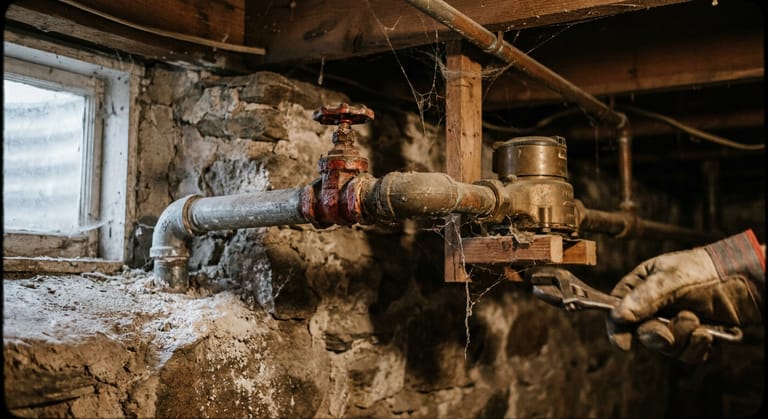
The dates behind the lead pipe ban
| Date | What it changed |
|---|---|
| 1986 | SDWA amendments shut out pipe, solder and flux short of lead free |
| 24 months after June 19, 1986 | State enforcement begins; some states had moved earlier |
| 1996 | Amendments pull in fittings and fixtures; non compliant products barred from commerce |
| January 4, 2014 | Purchases from this date fall under the 0.25 percent weighted average |
| September 1, 2023 | Certification turns mandatory under EPA's 2020 Lead Free Rule |
What lead free pipes were allowed to contain
Never zero. The 1986 wording capped solder and flux at 0.2 percent and pipe at 8.0 percent (EPA), so a pipe stamped compliant in 1992 could carry 8 percent of the metal by weight. In a house of that vintage the label settles nothing.
The Reduction of Lead in Drinking Water Act of 2011 swapped that pipe ceiling for a weighted average of 0.25 percent across the wetted surfaces of pipes, fittings and fixtures. EPA binds it to products purchased on or after January 4, 2014, and its 2020 Lead Free Rule added certification, compulsory from September 1, 2023.
Are lead pipes illegal to own?
Installing them is out; so is selling them: the 1996 amendments pulled fittings and fixtures into the same requirements and kept non compliant products out of commerce (EPA). Owning one is different. New lead pipe was banned from installation, the outer edge of the 1986 statute: what a plumber may install and what a supplier may stock, never what already sat underground.
Ready to talk to a licensed repipe pro?
Call (800) 555-0195No charge to call. A licensed repipe pro answers.Licensed repipe partners in your area- Every partner plumber is licensed and insured
- Calls routed around the clock
- Nothing billed for the call
- The plumber quotes you, and you say yes or no
Lead poisoning from water pipes: what the ban did not fix
What Congress rewrote was the supply catalog, not the chemistry. Corrosion of plumbing that contains the metal is how it reaches drinking water, EPA says, hardest where water runs high in acidity or low in minerals. Its corrosion control guidance names a second route: field sampling shows disturbing a line during infrastructure work sets particles loose. In the 2013 research cited there, most readings above the action level then in force came at disturbed sites, not undisturbed ones.
What EPA suggests while an old line is still in service
- Cold water only for drinking, cooking and formula; time on the boil removes none of it.
- Push water through the plumbing first: an open tap, a shower, a laundry cycle.
- Keep the screen at the faucet tip clear, and choose a filter certified against NSF/ANSI Standard 53 with a lead reduction claim.
Only a test shows what your tap delivers; our guide to testing tap water covers booking one through a certified lab.
When were lead pipes banned versus when must they come out?
Four decades separate the two rules. EPA issued the Lead and Copper Rule Improvements on October 8, 2024; the Federal Register carried it on October 30 and it took effect December 30, 2024. In the agency's plain summary, systems have 10 years to find and replace these lines, testing gets more rigorous, and word to the public about locations and plans improves.
November 1, 2027 is the compliance date at 40 CFR 141.80(a)(3). Mandatory replacement begins no later than then, at an average annual rate of at least 10 percent. The earlier milestone came from the Revisions rule: by October 16, 2024 every system owed the public an inventory of its service lines, each filed under one of four headings, lead, non lead, galvanized requiring replacement, or status unknown. Our rundown of city replacement programs maps which utility runs what.
How long do lead pipes last?
Wrong question, and the rule agrees. Such a line counts as a regulated contamination source, not a component with a service life, so every one under a system's control comes out inside 10 program years of the compliance date. Scale sets the pace: the Chicago Department of Water Management counts roughly 400,000 of them, and its 2026 budget statement frames removal as work measured in years and billions of dollars.
Check the pipe at your own meter
- Track down where it enters. EPA says look in the basement or crawl space, near the main shutoff or the meter.
- Take a coin to it. Gloves first. A bright silver streak marks the soft metal, galvanized steel stays dull gray, copper reads copper colored, per the City of Troy, NY identification table.
- Try a magnet. It grabs galvanized steel and ignores both lead and copper (EPA).
- Read the joint. EPA describes a wiped joint where an old run meets another material: a rounded ball of the metal.
When to call a licensed plumber
Call if any of this fits: a utility letter that calls your line lead, unknown, or galvanized requiring replacement; discolored water after nearby street work; a dull gray pipe at the meter that scratches shiny and shrugs off a magnet; a damp patch over the buried run; or a sale where the buyer wants the material confirmed on paper.
Grayfield publishes independently and does no plumbing work of its own. Dial (800) 555-0195 free and the line opens to a licensed and insured local plumber from our partner network, who verifies the material at the entry point and settles scope and price with you.
Ready to talk to a licensed repipe pro?
Call (800) 555-0195No charge to call. A licensed repipe pro answers.Licensed repipe partners in your area- Every partner plumber is licensed and insured
- Calls routed around the clock
- Nothing billed for the call
- The plumber quotes you, and you say yes or no